Guides · By Sub-Zero Repair Cherry Hills ·
Condensation in a Sub-Zero Fridge: Why It Forms and How to Stop It
Condensation in a fridge means humid air is getting in faster than the cold coil can pull the moisture back out, most often past a tired door gasket, a door that does not quite close, or a blocked defrost drain. Here is how to find which one and stop it.
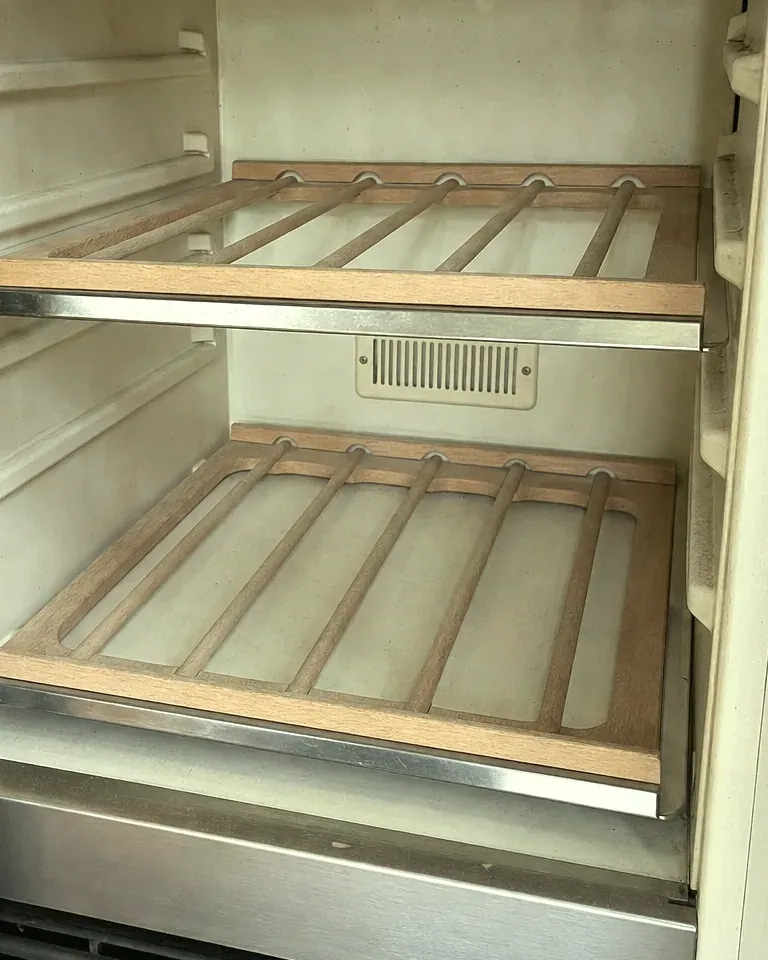
Condensation inside a fridge happens when warm, damp air reaches the cold walls and shelves faster than the refrigerator can draw that moisture back out. The beads on the back panel, the wet glass shelf and the puddle under the crisper are all water that was floating in the kitchen air a few hours earlier. A brief film after a long door opening is harmless and dries on its own. Water that greets you every morning usually means one of three things: a door gasket that no longer seals, a door or drawer that is not closing all the way, or a defrost drain that has stopped carrying meltwater out of the cabinet. Cherry Hills Village has a dry, semi-arid climate for most of the year, so a built-in that keeps sweating here is more likely to have a sealing or drainage fault than a humidity problem.
Normal moisture or a real fault
Every refrigerator collects some water. Each time the door opens, room air rushes in, chills and drops part of its moisture on the coldest surface it meets. In a frost-free design that surface is mostly the evaporator coil hidden behind the rear panel, which freezes the moisture and later melts it during a defrost cycle. From there the water trickles into a channel, drops through a tube to a shallow tray beside the compressor, and the condenser’s warmth dries it off.
You are looking at a fault when water turns up somewhere that path does not lead. Signs worth acting on: droplets that come back within hours of wiping, water pooling under the crisper drawers, a sheet of ice forming on the back wall, or moisture paired with food that feels less cold than it used to.
Where the water is coming from
Where the water sits says a lot about where it started.
- Along the door edge or on the front of the shelves. Warm air is slipping past the gasket. Gaskets harden with age, split at the corners or pick up sticky residue that stops them pressing flat against the cabinet face.
- On the back wall and in the bottom of the compartment. This is the classic sign of a blocked defrost drain. Meltwater backs up, spills into the cabinet and either pools or refreezes into a sheet.
- On food, containers and the underside of shelves. Steam from warm leftovers or open liquids is condensing inside. That is a habit to change, not a part to replace.
- Under the unit or behind the lower grille. That is no longer condensation. It may be the drain pan, or on an ice-making model the water supply line or its valve. Our Sub-Zero ice maker troubleshooting guide covers that side of things.
Checks you can make safely
None of these needs tools or removing panels.
- Paper-test the gasket. Shut a slip of printer paper in the door at four or five spots, hinge side and corners included. A slip that pulls free without any resistance marks a place where the rubber has lost its grip.
- Clean the gasket. Use warm water with a little mild soap, then dry it completely. Old spills are a frequent reason a perfectly sound gasket stops sealing.
- Look for something holding the door. A tall bottle, an overfilled door bin or a drawer sitting slightly off its track can leave a gap you cannot see from the front.
- Cover what goes in. Put lids on soups, sauces and anything still giving off steam, and keep each opening short rather than browsing with the door wide.
- Check the temperature. Drop an inexpensive thermometer into a cup of water, leave it overnight in the center of the fresh-food section, and note the number at breakfast.
If the drain is the culprit, resist the urge to push wire into it. On a built-in the drain path runs behind panels, and a punctured line or a refrozen plug is a bigger job than the original fault.
What a Sub-Zero is telling you
Sub-Zero controls give useful clues here. Classic (CL) and Designer (DET, DEC) units kill their interior lighting when a door or drawer has been left ajar, to limit the heat inside the cabinet. Sub-Zero’s advice is to close everything and wait one hour before calling for service, and a door open long enough to trigger that is also the likely source of the water.
On 600, 648PRO and 700 Series units, an EC40 code with the Service light flashing points to the freezer compressor running too long, which an ajar door can cause, as can a fan, sensor or sealed-system problem. Sub-Zero suggests cleaning the condenser when temperatures sit less than 10° above set, and booking service when they are more than 10° above and the door was not to blame. Leave the code alone while temperatures are still climbing.
Temperature matters on any model. If the fresh-food side sits above 48 degrees with the setting at 38, Sub-Zero says a coil cleaning by itself probably will not bring it back, and it adds that units less than 6 months old need no condenser cleaning. Older units do, and homes along the High Line Canal corridor see the cottonwood fluff each year; our page on cleaning the coil after the cotton falls explains the timing.
When ice forms with the water
Water and ice often travel together: a drain that backs up refreezes, and a leaking gasket lets frost build near the door. Thin frost can be wiped away. Where ice has built up thickly, the Classic and Designer manuals tell owners to power the unit off and soften the buildup using gentle heat from a hair dryer on its lowest setting, swept back and forth rather than held still. The PRO Series manual takes the other side: a handheld steamer is the tool for that line, and a hair dryer should stay out of it. Never chip at ice with a knife or scraper, because the liner and the tubing behind it puncture easily. If the ice returns within a week or two, melting it only treated the symptom.
When to call, and what it typically costs
Call when the simple checks do not stop the water, when ice keeps rebuilding at the back, or when temperatures drift upward. A visit from Sub-Zero Repair Cherry Hills costs $89, diagnosis included, and we credit that $89 toward the work once you approve it. Typical ranges, with the firm quote given after diagnosis:
- A failed defrost heater, thermostat or sensor, a common reason a drain freezes shut: $290–$640
- A new door gasket or seal for a door that no longer grips: $270–$670
- A tired evaporator or condenser fan motor: $320–$670
To be clear about who we are: this is an independent service that is not affiliated with the Sub-Zero brand or its maker. Reach us at (720) 575-1433, or read more about our Sub-Zero refrigerator repair work. A scheduled maintenance visit checks gaskets, hinges and the drain before a small seep turns into standing water.
Questions
What causes condensation in a fridge?
Moist air meeting cold surfaces causes it. That air gets in through a worn or dirty door gasket, a door or drawer resting slightly open, long door openings, or warm, uncovered food giving off steam. A blocked defrost drain adds a second source, because meltwater that should leave the cabinet stays inside and evaporates back onto the walls and shelves.
Is condensation in a fridge normal?
A little is normal, a lot is not. A light film after the door has stood open, or after a big load of room-temperature groceries, should clear within an hour or two once the door stays shut. Droplets that return every day, puddles under the crisper drawers or water running down the back wall point to a seal, door or drain fault worth tracking down.
How do I stop condensation in my fridge?
Keep the warm air out and give the meltwater a way to leave. Clean the door gasket and test it with a sheet of paper, make sure nothing on a shelf or in a door bin holds the door open, cover steaming dishes, and keep openings short. If water still collects, the defrost drain is likely blocked or the gasket needs replacing, which is a repair visit.
When does refrigerator condensation need a technician?
Call when it keeps coming back after the simple checks, or when it arrives with rising temperatures, frost on the back wall or ice where the drain sits. On a Sub-Zero, a reading above 48 degrees with the control set at 38 is a service call rather than a cleaning job, and a frozen drain usually means opening up the unit.
Due for a coil cleaning?
Call Sub-Zero Repair Cherry Hills at (720) 575-1433, or pick a time online. Tell us whether the grille is at the top or the toe-kick.